The Doug Flag
“The Cascadia flag conveys something more tangible than an abstract concept of demarcation of space. It is not a flag of blood nor of the glory of a nation, but a love of the bioregion; our ecological family, natural boundaries & the place in which we live & love.”
Alexander Baretich, designer of the Cascadia Doug flag
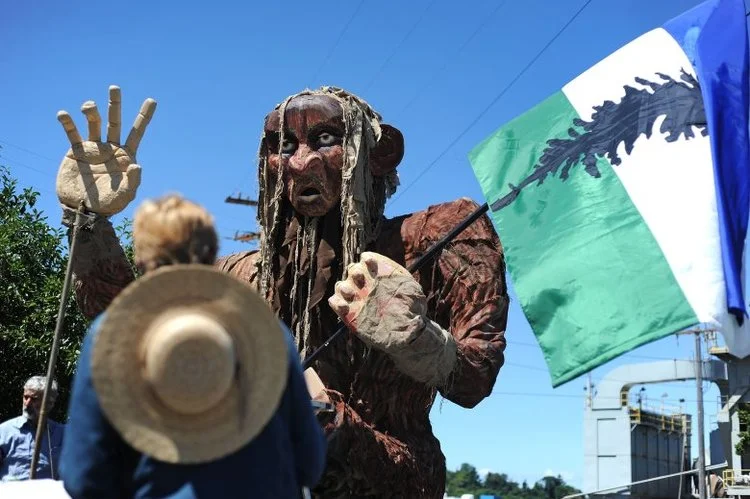
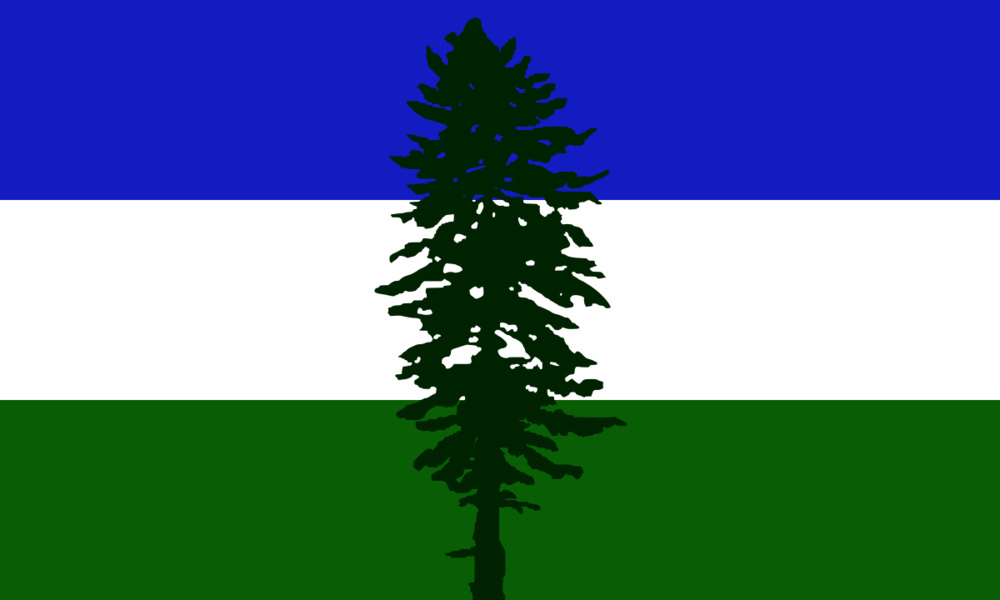
The Cascadia Doug flag is a symbol of our landscape, a direct representation of the bioregion, and the banner of the Cascadia movement. Designed by Portland native Alexander Baretich, the flag reads as a portrait of the place itself. The blue represents the moisture-rich sky above, the Pacific Ocean, the Salish Sea, and the lakes and inland waters of the region. Our home is a place of continuous cascading waters, flowing from the Pacific to the western slopes of the Rockies and Cascades, where water cycles back to the Pacific again. The white represents snow and clouds. The green represents the evergreen forests and fields of the Pacific Northwest. The lone-standing Douglas fir symbolizes endurance, defiance, and resilience. Together, these elements express what being Cascadian is all about.
A Bioregional Symbol
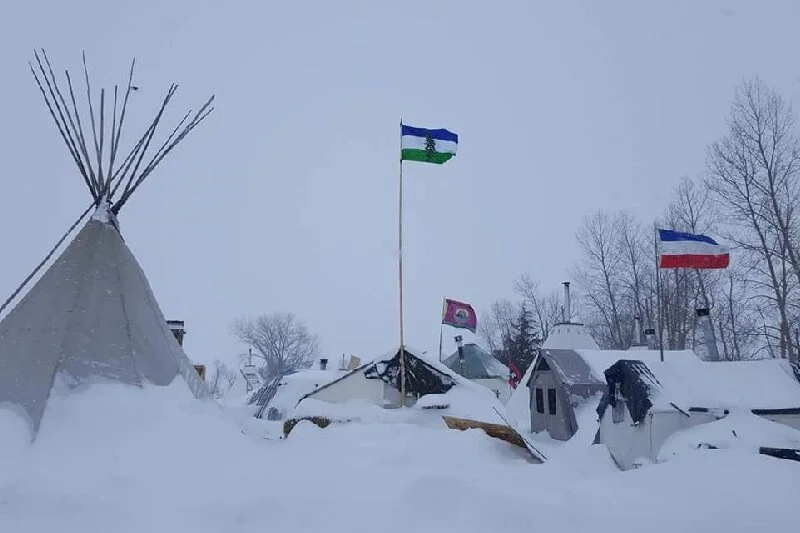
One of the best ways to understand the Doug flag is through the words of Baretich himself, who describes the flag as an idea that unfolds in layers. The first, surface-level reading is nationalistic: a new country, a new border. But that layer peels away.
“The next level then is the awareness that Cascadia is not defined by the limited borders of Oregon, Washington and British Columbia, but has greater broader borders that include Idaho, northern California, and southeast Alaska as well as northeastern Nevada, northwestern Wyoming, northwestern Montana and even a little of northern Utah… Cascadia the bioregion is based on watersheds or river drainage systems that flow all the way to the Rockies or continental divide…
Cascadia or any bioregion is not just a place, but a living complex of interactions and interconnectedness to many communities, human and nonhuman… we are not a human in a vacuum separated from Nature, but are extensions of each other and dependent on the health and dynamic interactions with each other.
The Cascadian flag captures that love of living communities in our bioregion. Unlike many flags, the Cascadian flag is neither a flag of blood nor a flag of the glory for a nation, but a love of the bioregion; our ecosystems and the dynamics interplay between tectonics, H2O, atmosphere and life; the place in which we live and love.”
Alexander Baretich
The Doug flag is not meant to be the one Cascadia flag so much as one of thousands. Every community, ecoregion, watershed, business, and cause is encouraged to adopt and adapt the flag for its own purposes. Flying the green, white, and blue signals a shared regional identity, and a commitment to the common beliefs, dreams, and principles we share.
Cascadia is a movement born in the Northwest throughout the 1980s. It is a gateway movement, created by people who live here and are from here. It inspires those born here to protect what they love, and it gives those arriving here something real, authentic, and fun to connect with.
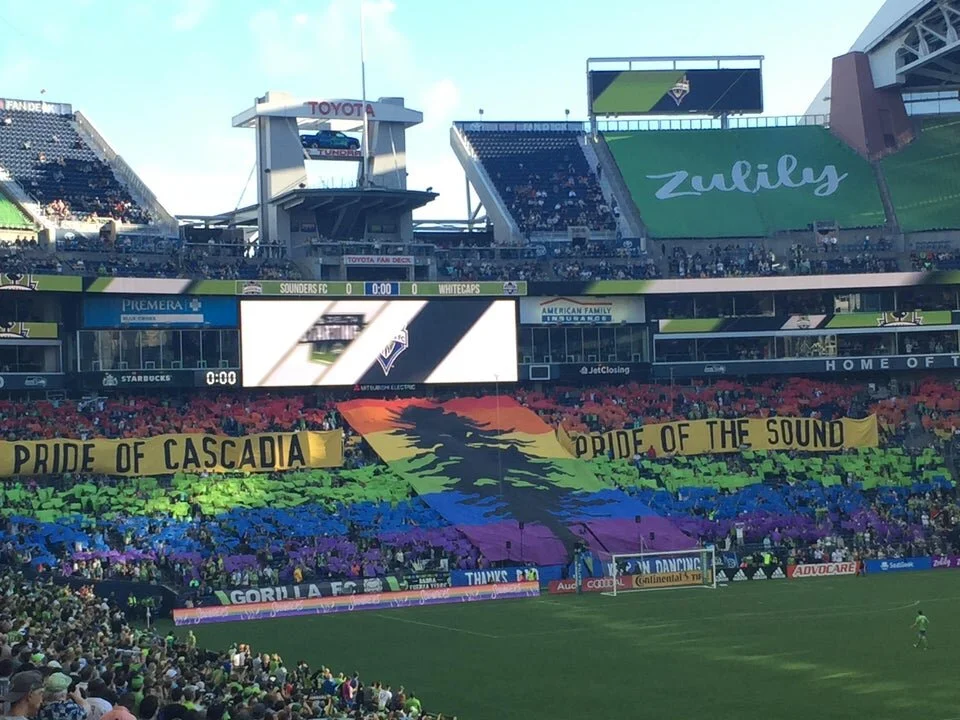
Much like the Rainbow flag or the Occupy fist, symbols can be a potent means of making a public and visible statement about shared values and principles. With so many brands manufactured for our consumption, with global climate crises, and with a rise of intolerance, it matters now more than ever that communities carry symbols of their own making, driven by a love of place and neighbor rather than by profit.
A Movement Symbol and Brand
Symbols pervade our lives at every level, and it is more important than ever that the movement shares symbols that represent its values and principles. The Doug flag is a movement symbol, not a for-profit brand. It is a grassroots, people-powered mark for every person interested in protecting our bioregion, improving our shared livelihood, and helping make the world a better place.
We are all Cascadian, and together we are the Cascadia movement.
The Doug flag is also a symbol against hate. The Cascadia movement works to partner with and create safe space for frontline and traditionally marginalized communities and voices. We reject racism, sexism, white supremacy, and discrimination of any kind, including discrimination based on sexual orientation, religion, or personal belief. We are building a coalition movement that empowers every person and community; that provides space for Indigenous, POC, and traditionally marginalized communities to advocate with their own voices and find solidarity and support; and that shows the beauty of this region, its people, and our incredible diversity.
The Cascadia Flag Trust
The Department of Bioregion is the Cascadia Flag Trust. As a 501(c)(3) nonprofit, it owns and stewards the Doug flag mark and copyright on behalf of the movement, protecting the flag from being co-opted or pirated by for-profit companies with no connection to Cascadia’s communities, groups, or causes. The Doug flag is a registered trademark (®) and copyright of the Department of Bioregion, and stewardship follows a two-track use framework.
Community use is free
Community, cultural, and nonprofit use of the Doug flag is free. Fly it, adopt it, and adapt it for your watershed, neighborhood, or cause; no license is required for non-commercial community use. If your group is doing good work under the flag, reach out. We are glad to connect, and to list aligned groups in the Cascadia directory.
Commercial use is licensed
Commercial use of the Doug flag is licensed by the Department of Bioregion to keep use aligned with Cascadian values and principles. A portion of all money raised through commercial licensing supports flag creator Alexander Baretich and the Cascadian Flag Cooperative. To request a license, email cascadia@deptofbioregion.org. Approved sellers will be listed in the Cascadia business directory when it launches.
Buy a Flag
Looking for a flag? Buy a 3×5 foot or 2×3 foot Cascadia Doug flag in the store. Support local; a portion of proceeds directly supports the flag maker.